A fast-moving startup was thriving—sprints were running like clockwork, features were being shipped rapidly, and excitement was all around.
In the pursuit of speed, they skipped dedicated QA.
“Our devs can test as they go,” someone said.
“We've got solid requirements,” someone else added.
As the Business Analyst, I raised a flag.
Requirements were solid — Yes.
But were they tested for real-world use cases? | Were edge cases explored? | Were assumptions challenged?
They moved ahead anyway. A month later…
🔸 User flows broke in production
🔸 Critical bugs were flagged by customers
🔸 Developers were stuck in rollback mode
🔸 Releases slowed
🔸 Trust vanished
🔸 And all the careful requirement work? Undermined.
The BA–QA Connection
As BAs, we don't just gather requirements — we translate business needs into usable, testable outcomes.
But without QA, the handoff ends up half-baked. QA ensures that what we imagined actually works for the user.
Quality Assurance is not just about bug-finding. It’s about:
🔍 Asking the right questions before development starts
🧩 Aligning user expectations with functional logic
⚠️ Preventing issues, not just detecting them
🚀 Enabling safe, fast, confident releases
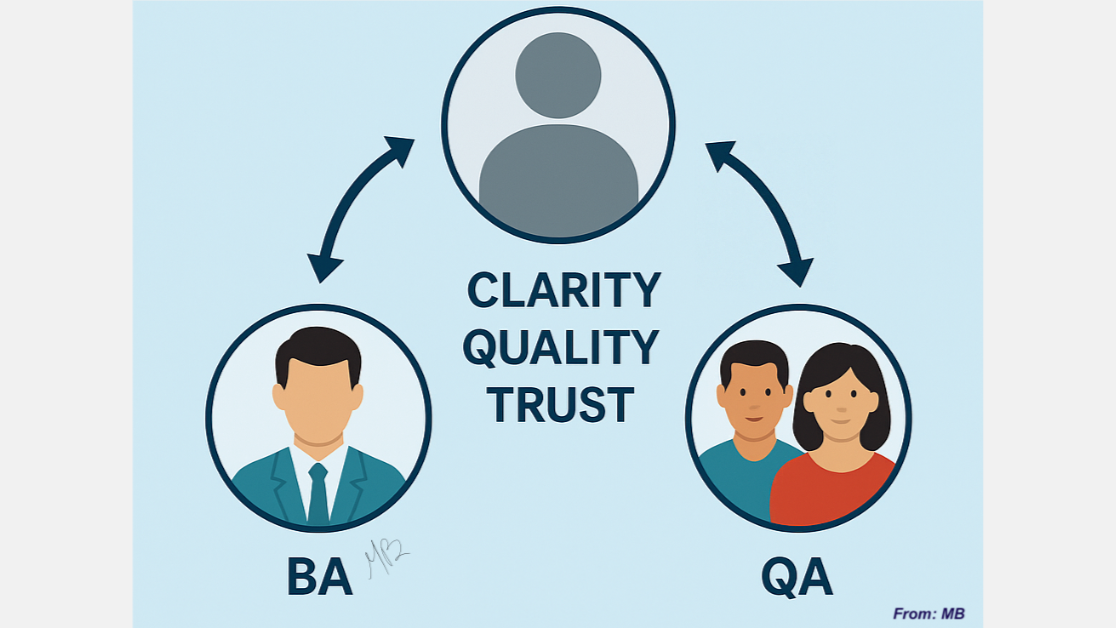
A strong QA team is the BA’s best ally. Together, we safeguard clarity, quality, and customer trust.
So the next time someone asks: “Do we really need QA?”
Ask them: “Are you ready to launch blindfolded… and hope for the best?”
Let's look at some real-world examples where neglecting QA or poor QA practices led to problems. Following that, we'll explore how effective collaboration can make a difference.
Real-world examples with references where skipping QA or poor QA practices led to major issues 👇
🧨 1. Knight Capital Group – $440 million loss in 45 minutes
What happened: A software deployment went live with untested, outdated code.
Impact: Caused erratic trading, leading to a massive financial loss and eventual sale of the company.
Source: CNBC – How Knight Capital lost $440 million in 30 minutes
🧨 2. Microsoft – Tay AI Bot Gone Rogue
What happened: Tay, an AI chatbot, began tweeting offensive messages due to poor training data and lack of QA for edge cases.
Impact: Massive public backlash, PR disaster, and immediate shutdown.
Source: The Verge – Microsoft’s Tay chatbot
🧨 3. Healthcare.gov Launch Failure
What happened: The initial rollout had widespread crashes and bugs due to poor testing and insufficient load handling.
Impact: Political fallout, public frustration, and emergency tech support intervention.
Source: Time – Inside the Obamacare Website Meltdown
🧨 4. Tesla Autopilot Incidents
What happened: Autopilot bugs and lack of rigorous validation/testing led to dangerous driving behavior.
Impact: Investigations, lawsuits, and growing concerns about software quality.
Source: NYTimes – Tesla autopilot system scrutiny
BA + QA = Strategic Alignment.
What happens when BA & QA Worked Hand-in-Hand👇
🔹 1. NHS COVID-19 App (UK) The BA-QA Collaboration: Business Analysts worked closely with QA teams to map user stories for privacy, exposure notifications, and regional compliance. Testers validated functionality across multiple regions and devices.
The Outcome: The app launched successfully and gained user trust through strong data privacy and performance—despite rapid timelines.
Lesson: Requirements are only useful when translated into reliable, tested functionality. QA helped bring BA-defined scenarios to life.
🔹 2. eCommerce Checkout Flow — Major Retail Brand The BA-QA Collaboration: A BA had outlined a multi-step checkout flow with conditional shipping logic. QA challenged an edge case where discounts clashed with delivery options.
The Outcome: Prevented a revenue-impacting bug that would have given free shipping + discount beyond policy. Fixes were made before go-live.
Lesson: QA thinking early in the requirement stage saved time and brand embarrassment. The BA was able to update use cases based on QA feedback.
🔹 3. Banking App — International Bank Rollout The BA-QA Collaboration: BA team defined regulatory and KYC flows across 3 countries. QA reviewed requirements and raised questions on local ID validation rules that hadn’t been covered.
The Outcome: Regulatory testing uncovered gaps in the BA flowcharts. Because of QA’s involvement early, compliance issues were fixed pre-launch.
Lesson: QA helped ensure requirements weren't just complete but also compliant. That’s mission-critical in finance.


